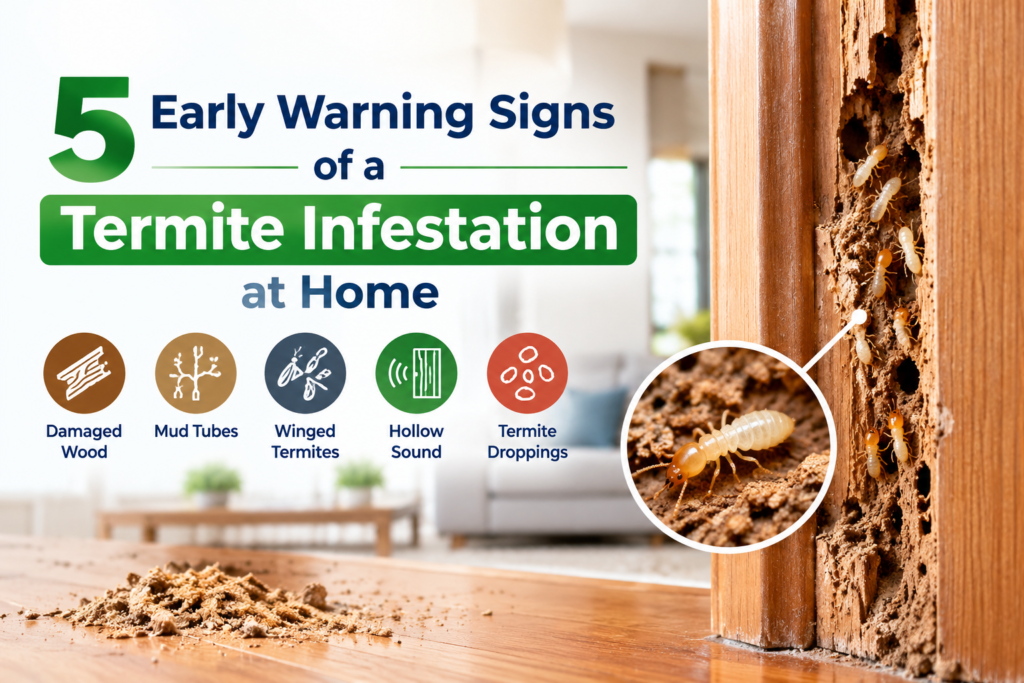
Termites are often called “silent destroyers” for good reason. They can chew through wood, flooring, and even wallpaper for months — sometimes years — before you notice any visible damage. By the time most homeowners spot the problem, the infestation has already caused serious structural harm. At Hill Pest Control and Cleaning, we’ve inspected hundreds of homes where early signs were missed simply because people didn’t know what to look for.
The good news is that termites do leave clues. If you catch them early, you can save thousands of rupees in repair costs and protect the structural integrity of your home. Here are five early warning signs every homeowner should watch for.
-
Mud Tubes Along Walls or Foundations
Subterranean termites build narrow, pencil-width mud tubes to travel between their underground colonies and your home while staying protected from open air and predators. These tubes are usually found along exterior walls, foundations, crawl spaces, or wooden support beams. If you spot brownish, tunnel-like structures running vertically along your walls, don’t ignore them — break one open. If termites are inside, it’s time to act immediately.
-
Hollow-Sounding or Damaged Wood
Termites eat wood from the inside out, which means the surface can look perfectly normal while the interior is completely hollowed out. Try tapping on wooden beams, door frames, or furniture — a hollow or papery sound is a strong indicator of termite activity. You might also notice wood that crumbles easily or has a maze-like pattern of tunnels when broken open.
-
Discarded Wings Near Windows and Doors
When a termite colony matures, it sends out “swarmers” — winged reproductive termites — to start new colonies. After swarming, these termites shed their wings, often leaving small piles near windowsills, doors, or light fixtures. Finding discarded wings is one of the clearest signs that an active colony is nearby, since swarming usually happens close to the original nest.
-
Bubbling or Peeling Paint
Damaged or bubbling paint that resembles water damage can actually be a termite warning sign. As termites tunnel beneath painted wood or drywall, they create moisture and pressure that causes the surface to warp, bubble, or peel. This is frequently mistaken for a plumbing leak, so if you rule out water damage and the paint still looks off, termites could be the real cause.
-
Frass (Termite Droppings)
Drywood termites, unlike their subterranean cousins, push their droppings — called frass — out of small holes in the wood they’re infesting. Frass looks like tiny wood-colored pellets or fine sawdust piled near baseboards, window sills, or furniture. If you’re cleaning up unexplained piles of what looks like sawdust on a regular basis, it’s worth investigating further.
Don’t Wait Until the Damage Is Done
Termite infestations rarely announce themselves loudly. They work quietly, and by the time damage becomes obvious — sagging floors, crumbling wood, or visible tunnels — the cost of repair is often far higher than the cost of prevention would have been. Regular inspections, especially in humid climates or older homes, are the best way to catch an infestation before it spreads.
If you’ve noticed any of these five signs, or simply want peace of mind, don’t wait for the problem to grow. Hill Pest Control and Cleaning offers professional termite inspection and treatment services designed to protect your home from the ground up. call us directly at +91 9900483326 to book an inspection today.
Frequently Asked Questions
- How quickly can termites damage a home?
Termites can cause significant structural damage within a few months to a few years, depending on colony size and how early the infestation is detected. Small colonies work slowly, but large, mature colonies can cause serious harm much faster. - Are mud tubes always a sign of termites?
Yes, mud tubes are almost exclusively built by subterranean termites for travel and protection. If you find one, it’s best to have it inspected rather than assume it’s harmless. - Can I treat a termite infestation myself?
DIY sprays and baits may kill visible termites, but they rarely eliminate the entire colony, which can be hidden deep underground or within walls. Professional treatment ensures the whole colony is addressed. - How often should I get a termite inspection?
Most pest control experts recommend an inspection at least once a year, and more frequently if you live in a termite-prone region or have had previous infestations. - Do termites only affect wooden furniture?
No, termites can damage flooring, wallpaper, insulation, and even paper products like books and documents, in addition to wooden structures and furniture. - What should I do if I find termite wings or frass?
Avoid disturbing the area and contact a pest control professional as soon as possible. These signs usually indicate an active, nearby colony that needs prompt inspection and treatment.